

5 October 2026
How to Build Trust With a Domestic Worker Without Creating a Culture of Suspicion
Trust is one of the most important parts of any household employment relationship. It is also one of the areas that creates the most anxiety.
Many employers worry about leaving someone in their home while they are at work. They may have children, pets, valuables or private information to protect. At the same time, domestic workers need to feel respected, trusted and able to do their jobs without being watched or treated as suspects.
The answer is not blind trust. It is a professional working relationship built on clear expectations, respectful communication and consistent systems.
Start with a professional introduction
Trust begins before the first working day. Whenever possible, employ through a trusted referral, check references and have an honest conversation about the role. Explain the household routine, the areas that need special care, the rules around visitors, pets, keys, security and privacy.
This is not about making someone feel unwelcome. It is about ensuring that both parties understand the environment from the beginning. A well-planned induction helps a domestic worker feel more confident and helps the employer avoid misunderstandings later.
Create clear household expectations
Unspoken rules often create unnecessary tension. An employer may assume that certain cupboards are private, that the alarm must be set at a particular time, or that a pet should not be fed table scraps. A domestic worker cannot be expected to know these things unless they are explained.
A simple written household guide can cover:
- Working hours and break times
- Daily, weekly and monthly tasks
- Security procedures
- Pet care instructions
- Which areas or items are private
- How to report breakages or problems
- Preferred communication methods
Clear expectations protect both the household and the worker. They reduce frustration, improve consistency and make feedback easier to give.
Avoid surveillance-led management
Cameras and tracking systems can create a culture of fear if they are used secretly or as a substitute for communication. If security cameras are used in a home, workers should know where they are and why they are there. Cameras should never be placed in private areas such as bathrooms or sleeping spaces.
More importantly, no camera can replace a respectful conversation. If something goes wrong, address it calmly and directly. Ask questions before making assumptions. In many cases, what appears to be carelessness is actually a gap in training, an unclear instruction or an unrealistic workload.
Invest in practical training
Training is one of the most effective ways to build trust. When domestic workers are trained in cleaning standards, hygiene, laundry care, safe product use, household organisation, childcare support or food preparation, they are more confident in their work. Employers gain peace of mind because tasks are completed using recognised methods rather than guesswork.
Customised domestic worker training is particularly valuable because every household is different. A home with young children, elderly family members, pets, allergies or high-value finishes needs specific systems and skills.
Training should not be viewed as a correction. It is an investment in professionalism, confidence and a better working relationship.
Respect builds reliability
Trust grows when people feel seen and valued. Pay fairly and on time. Give clear feedback. Recognise good work. Be realistic about what can be completed in a day. Treat domestic work as skilled work that supports the smooth running of a household.
A respectful employer is more likely to build loyalty. A supported domestic worker is more likely to take pride in her work, communicate openly and remain in the role for longer.
The strongest household relationships are not built on suspicion. They are built on professionalism, training and mutual respect.
Need help creating clearer household systems or improving standards? Ace of Maids provides customised domestic worker training solutions designed around your household’s real needs.
5 August 2026
Do domestic workers stay longer because they’re paid more… or because they feel valued?
I’ve been thinking about this after speaking to a few employers recently.
Everyone talks about wages (which are obviously important), but very few people talk about what actually makes someone want to stay in a job for years.
From what I’ve seen, the employers who have the longest-lasting relationships with their domestic workers usually do three simple things really well:
1. Treat them like a professional.
Clear expectations, respect, and involving them in household routines instead of treating them as “just the cleaner” goes a long way.
2. Invest in their growth.
Whether it’s learning better housekeeping techniques, improving organisation skills or understanding new cleaning methods, professional development benefits both the employer and the domestic worker. Better skills often lead to greater confidence and a better-run home.
3. Say thank you.
It sounds simple, but genuine appreciation, constructive feedback and recognising good work are surprisingly rare. People are far more likely to take pride in their work when they know it’s noticed.
I’m curious…
For those of you who’ve had the same domestic worker for many years:
What do you think made them stay?
And for domestic workers reading this:
What has an employer done that made you genuinely feel appreciated?
I’d love to hear both sides of the conversation.
At Ace of Maids Training, we’ve found that the strongest employer–domestic worker relationships are built on professionalism, mutual respect and continuous learning—not just a payslip. I’m interested to see whether others have found the same.
Written by Nikki – The Ace of Maids Boss Lady
1 August 2025
Raising Standards at Home in South Africa
In today’s fast-paced world, the demand for efficiency, professionalism, and excellence at home is higher than ever. At the heart of many South African households is the trusted domestic worker—a role that is both essential and deserving of recognition, respect, and professional support.
More and more employers are now turning to expert-led training to unlock the full potential of their household staff. Ace of Maids Training, the leading provider in Johannesburg and Pretoria, is at the forefront of this movement.
Customised Training for Real Results
As the recognised leader in the domestic worker and staff training realm, Ace of Maids Training offers fully customisable, in-house sessions designed to suit the unique needs of every household.
From laundry care and ironing to deep cleaning, domestic cooking, and childcare basics, their approach is both flexible and impactful—ensuring that every skill taught can be applied immediately and effectively.
“Our mission is to provide real skills that make a real difference in the daily lives of both the employer and the domestic worker,”
— Nikki J, Founder of Ace of Maids Training
The Benefits of Professional Domestic Worker Training
1. Tailored, On-Site Learning
Training is conducted right in your home or office, making it directly relevant to the worker’s daily tasks and environment.
2. Language Inclusivity
Sessions are available in English, Zulu, Xhosa, and Sotho—ensuring every domestic worker fully understands and retains what they learn.
3. Immediate, Practical Impact
Participants start applying their new skills from day one, with visible improvements in efficiency, quality, and attention to detail.
4. Boosted Confidence and Pride
A well-trained domestic worker gains confidence, motivation, and a stronger sense of professionalism.
5. Formal Recognition
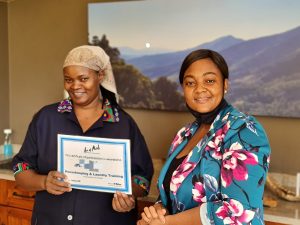
Each trainee receives a certificate of completion, serving as both a reward and a lasting reminder of their value and capability.
An Investment in Quality, Safety, and Peace of Mind
Whether you have just welcomed a new domestic worker into your home or wish to refresh the skills of a long-standing staff member, professional training is a smart, lasting investment.
Serving households across Gauteng, Ace of Maids Training is trusted for its practical, respectful, and results-driven approach to staff development. Employers consistently agree—training a domestic worker through Ace of Maids is not just helpful, it’s essential for a harmonious and well-run home.
Click Here to Download Laundry Care Course Info
Click Here to Download Cooking Course Info
Click Here to Download Housekeeping/Cleaning Course Info

18 August 2025
Ace of Maids Training Sets the Standard
Johannesburg, South Africa – In a country where domestic workers play a vital role in maintaining households, many employers are now recognising the need for professional training to improve both efficiency and quality of work. Leading the way in this growing field is Ace of Maids Training (www.aceofmaids.co.za), the premier specialist in household staff training across Johannesburg, Pretoria, and greater South Africa.
Founded in 2011, Ace of Maids Training has built a reputation as the trusted name for employers who want measurable improvements in the skills and confidence of their domestic workers, cleaners, and helpers.
The Leader in Laundry Training and Household Skills
One of the company’s most in-demand programmes is its Laundry Training Course, a five-hour, in-home session that equips domestic workers with the knowledge to handle everything from sorting, stain removal, and machine care to ironing and wardrobe presentation.
Employers consistently report noticeable, measurable improvements after training – reduced damage to clothing, better garment care, and improved time management in daily tasks. For many households, the difference between “just getting by” and “professional quality results” has been unlocked by this specialised training.
Training in the Employer’s Home, in Multiple Languages
Unlike generic training centres, Ace of Maids Training conducts sessions in the employer’s home, ensuring staff learn in the exact environment where they will apply their skills. Courses are offered in multiple South African languages, bridging communication barriers and ensuring that every domestic worker fully understands and confidently applies what they are taught.
Why Employers Choose Ace of Maids Training
-
Measured results: Employers see immediate improvements in laundry care, cleaning standards, and overall professionalism.
-
Tailored programmes: Training is customised to the household’s unique needs.
-
Convenience: All training takes place on-site, reducing disruption and improving skill transfer.
-
Trusted since 2011: With over a decade of experience, Ace of Maids is South Africa’s most established household training brand.
Raising Standards, Empowering Workers
By investing in professional training, employers not only benefit from better household standards but also uplift their domestic workers, giving them skills that foster pride, professionalism, and long-term employability.
“South African homes deserve world-class standards, and our domestic workers deserve the opportunity to gain professional skills,” says the founder of Ace of Maids Training. “We are proud to be the link between kindness and professionalism in households across Johannesburg, Pretoria, and beyond.”